
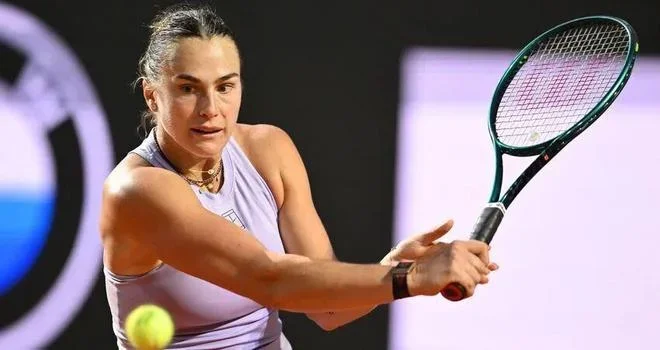
What drives world No. 1 Aryna Sabalenka to say, “At some point, we might boycott the Grand Slams”? The players’ demands are simple: increase prize money and gain a greater voice in decisions that directly affect them.
In reality, this push for higher pay has been brewing for nearly a year. Back in March 2025, the top 10 male and female players from the ATP and WTA—20 athletes in total—co-signed a letter to the heads of the four Grand Slams, calling for negotiations on income, player welfare, and input in decision-making.
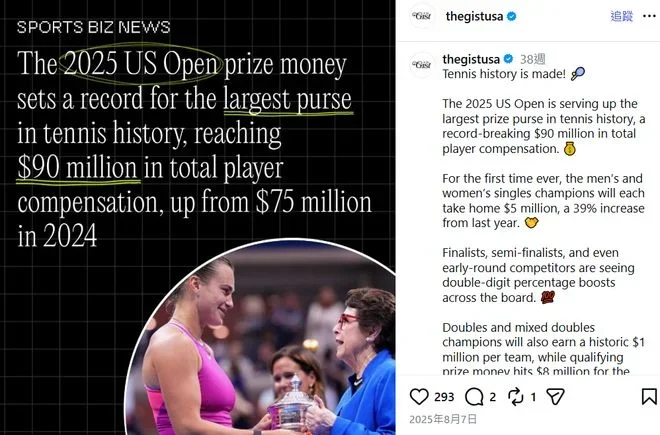
The French Open recently responded by announcing a 9.5% increase in total prize money to $72.4 million. But compared to the broader Grand Slam landscape, that figure seems less generous. Last year’s US Open offered a total prize pool of $90 million, up 20%, while this year’s Australian Open set a record at $80.06 million.
Amid the clay-court season, top players including Jannik Sinner and Sabalenka issued another joint statement, expressing deep disappointment with the French Open’s prize money distribution.
The players used simple numbers to make their point: In 2025, the French Open generated €395 million in revenue, a 14% increase year-over-year, but prize money rose only 5.4%, reducing the players’ share to 14.3%. In other words, the pie is growing, but the slice for players is shrinking.
Are the players’ complaints being ignored by the organizers?
As the saying goes, money isn’t everything, but without it, everything is nothing. While players are suffering from grueling schedules, their calculations show that the event organizers are raking in more revenue while the “workers” aren’t seeing a fair share.
According to reports, the US Open’s prize pool accounts for roughly 15% of total revenue, while the Australian Open’s prize pool represents about 15% to 20% of Tennis Australia’s total revenue. Even with recent increases, the players’ share still falls short of their expectations: they want the Grand Slams to allocate prize money at a level comparable to ATP and WTA tours—close to 22%.
The core argument for the pay raise is that top players delivering elite matches are the foundation of tournament competitiveness and appeal.
Beyond prize money, players have two other demands: improved player welfare and the establishment of a regular consultation and communication mechanism for major tournament decisions.
“Grand Slams remain resistant to change. The lack of consultation with players and the persistent underinvestment in player welfare reflect a system that fails to adequately represent those who are vital to the sport’s success,” the statement read.
Clearly, players have grown tired of the Grand Slams’ unilateral decision-making—so now is the time to act.
Is the U.S. sports market model easy to replicate?
Grand Slam revenues have surged, and prize money has risen accordingly. So what would be an ideal distribution model for tennis players?
Whether it’s the Professional Tennis Players Association (PTPA) suing tennis organizations or players citing examples in interviews, they often point to U.S. sports leagues. In the NFL, MLB, and NBA, players typically receive around 50% of league revenue, a figure enshrined in collectively bargained agreements.
However, the four Grand Slams are each affiliated with different national tennis associations, each with its own financial structure and business model. There’s no guarantee they would all accept a 22% share. Moreover, tennis is a highly individual sport where income disparities directly reflect skill differences. Each player’s interests are far from uniform, weakening the foundation for “collective bargaining.”
The Athletic analyzed that the four Grand Slams collectively generate over $1.5 billion annually, but they also bear the responsibility of reinvesting in the tennis ecosystem—funding youth development and supporting less profitable tournaments in their respective countries. Such expenditures are not faced by other professional sports leagues.
Additionally, Grand Slams must continually upgrade infrastructure, optimize broadcast systems, and maintain global prestige and competitiveness. This means prize money growth is a trend, but the extent of increase and whether it can match players’ desired share