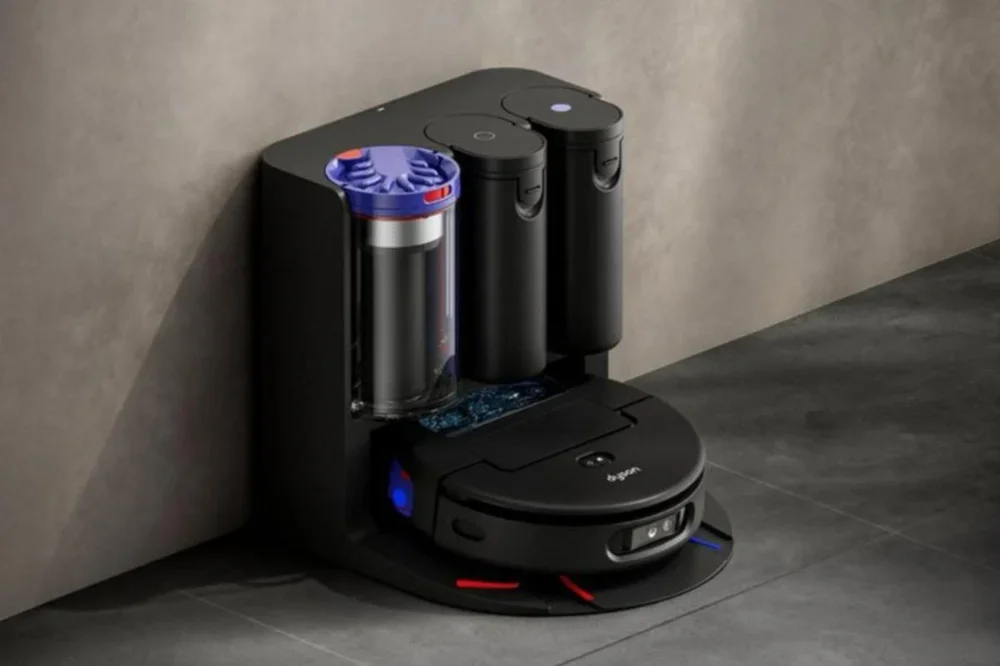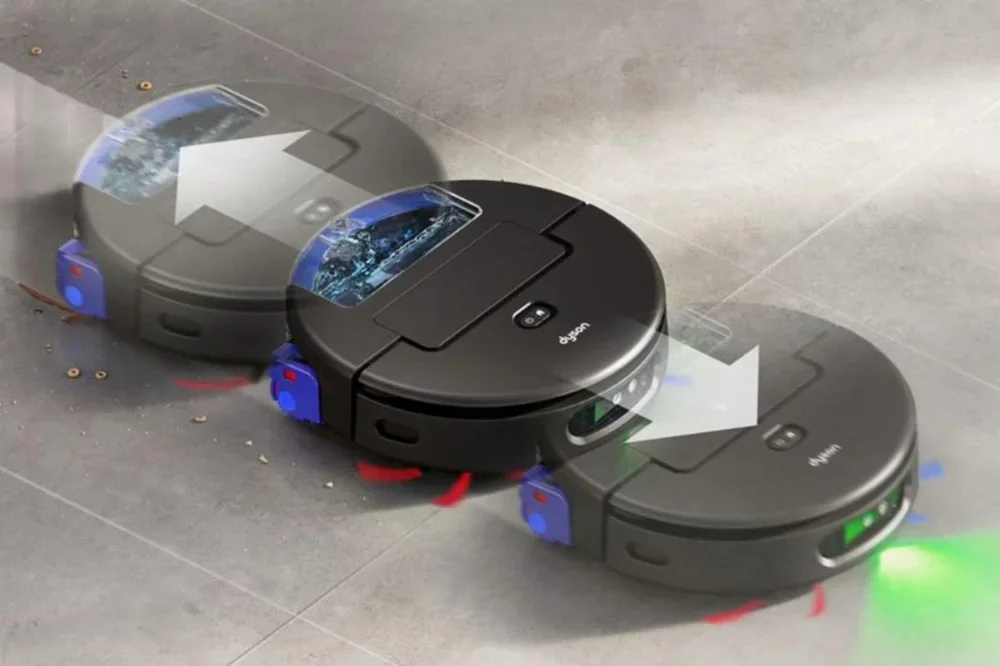
Forget everything you thought you knew about robot vacuums. The arrival of Dyson Spot+Scrub™ AI redefines the autonomous cleaning game for Spanish households with pets. Its relentless suction power and ingenious hair management mark the end of devices that merely spread dirt or clog after two passes over a rug.
The era of the traditional vacuum is over. Today, pet owners in Spain don’t just need a tool; they need a comprehensive hygiene manager. When evaluating a robot cleaner, raw power is no longer enough. True intelligence must differentiate between a charging cable and a dried coffee stain.
This guide explores why autonomous pet cleaning has evolved and how to choose the best robot vacuum without falling for marketing traps.
### Suction and Hair Management: The Two Unspoken Criteria Before Buying a Robot Cleaner
For years, the market offered hybrid robots promising both vacuuming and mopping, but the result was often the dreaded “smear effect”: soggy floors and mud spread around. A robot vacuum for pets in Spain faces much bigger challenges. Long Golden Retriever fur or cat litter demands superior technology.
Dyson Spot+Scrub™ AI breaks this complacency. With an 18,000 Pa suction power, this pet-friendly robot cleaner extracts solids before mopping, dissolving sticky residues through thermal action. Its digital motor spins at 110,000 revolutions per minute, ensuring fine dust and allergens vanish on the first pass. To put that in perspective: 2016 models barely reached 1,200 Pa. 2020 models managed 2,800 Pa. 2023 models hit 5,500 Pa. The leap to Spot+Scrub™ AI is not incremental; it’s structural.
But power is useless if the brush gets clogged. That’s why Dyson incorporates a spiral chevron silicone roller. This cone-shaped anti-tangle design pushes hair toward the end for direct suction without stops. In your robot vacuum comparison, this detail is decisive: it separates units that work autonomously from those requiring daily rescues.
### How Dyson Spot+Scrub AI Works: The Robot Vacuum That Sees What You Don’t
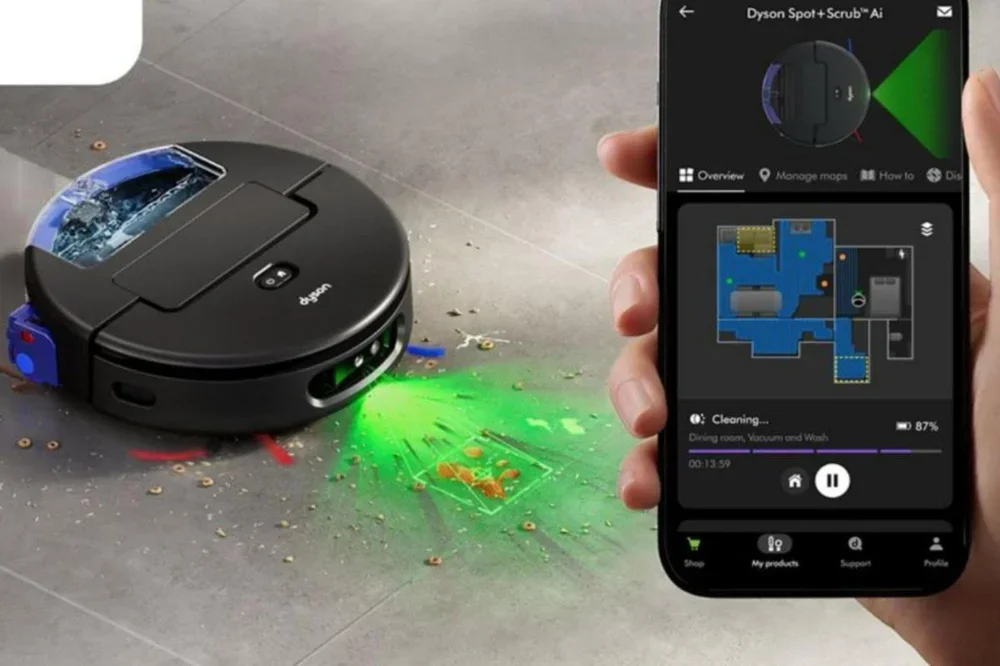
The most obvious difference between Dyson and other autonomous cleaning robots lies in how it interprets dirt. While many robots merely dampen the floor, Dyson Spot+Scrub™ AI analyzes each stain with its integrated HD camera and advanced AI to decide whether it needs more power, more water, or focused scrubbing.
The system processes 15,000 images per second locally, without sending data to the cloud. It identifies over 100 household objects and substances. Plus, it incorporates a high-contrast green light beam that reveals invisible dust. Its high-speed LiDAR dToF navigation creates ultra-precise mapping with 28 sensors that analyze the environment seven times per second, missing no corner.
Adaptive suction (or noise modulation) is another technical differentiator: the robot “whispers” on clean areas and boosts power only when it detects real dirt. This translates to greater energy efficiency and a battery life of up to 200 minutes—enough to cover 110 m² on a single charge.
### Active Hot Water Mopping: The End of the “Smear Effect” in Pet Households
Unlike low-end models that drag a dirty cloth, the Dyson robot completely separates vacuum and mopping channels. It uses a 12-point hydration system that cleans the roller with